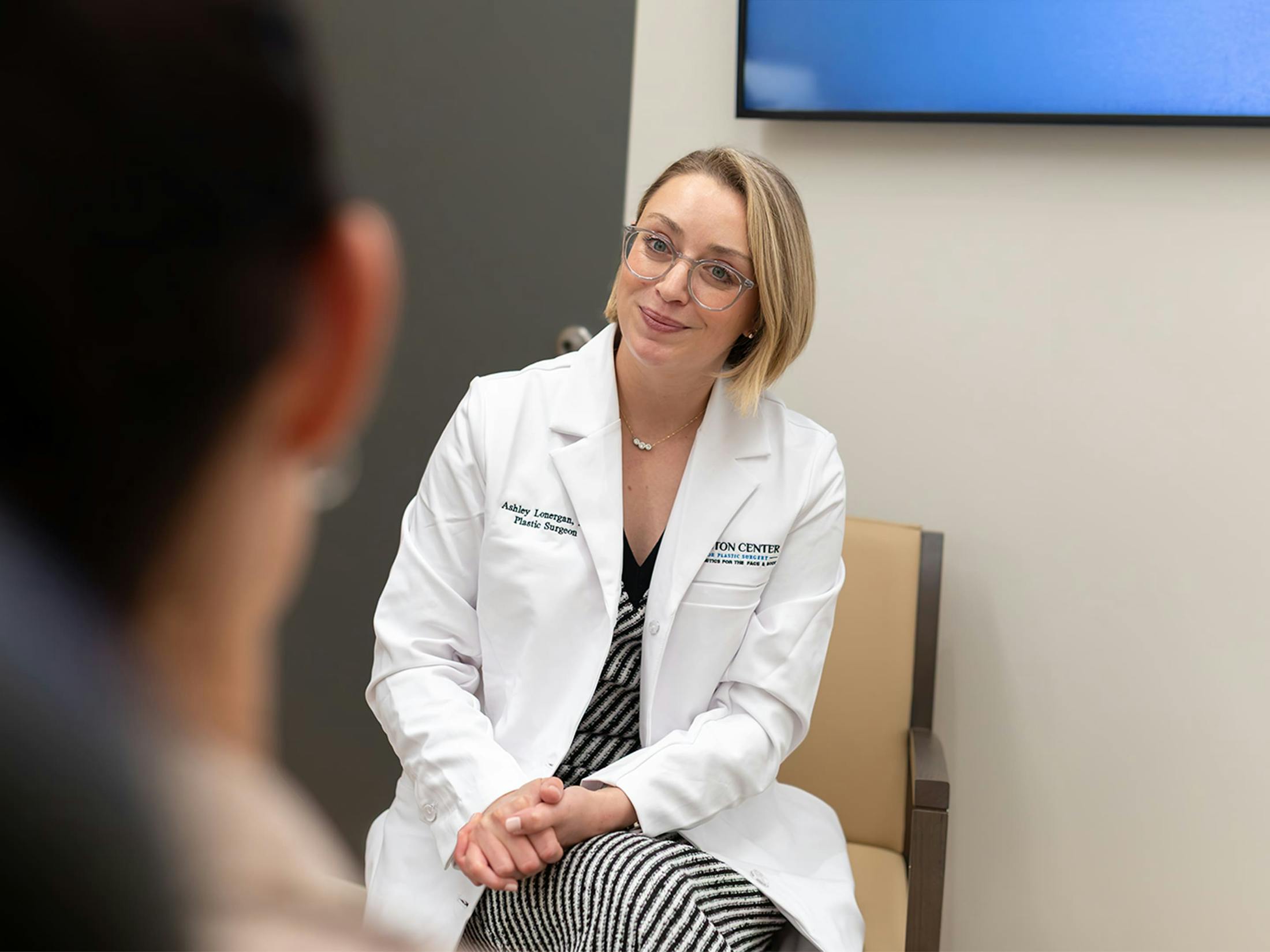
The Full Picture of Your Surgery Journey

Surgical outcomes depend on far more than what happens during the procedure itself, and careful preparation on both ends plays a real role in your final results. As a patient at the Boston Center for Plastic Surgery, Dr. Ashley Lonergan will walk you through a specific pre- and post-op plan tailored to your procedure, rather than a generic checklist applied to every patient regardless of what they're having done.

Doctor media

Why Choose Dr. Ashley Lonergan?

Dr. Lonergan's residency in Otolaryngology, Head and Neck Surgery, at the University of California, Irvine, following her medical degree from Tufts University, laid the foundation for the thoroughness with which she reviews a patient's health history and surgical readiness before ever scheduling an operating room date. She applies that same rigor to every procedure across her Boston practice, whether it's a facelift or a smaller outpatient treatment.

Her fellowship at The Williams Center for Plastic Surgery, completed under Dr. Edwin Williams and Dr. Keimun Slaughter, also shaped how closely she stays involved during recovery, rather than treating aftercare as a formality once surgery concludes. She'll personally confirm your healing is progressing as expected at each follow-up visit, and she's direct if something needs more attention than a standard recovery timeline allows.

Pre-Op Instructions

Your Initial Health Review

Every surgical plan starts with a thorough review of your medical history, current medications, and any prior surgeries, since these factors directly affect both your candidacy and your recovery timeline. Dr. Lonergan will use this review to flag anything that needs to be addressed or adjusted before your procedure date.

Adjusting Medications and Supplements

Certain medications and supplements will need to be paused in the weeks before surgery, since they can increase bleeding risk or interfere with healing. You'll typically need to stop the following unless Dr. Lonergan advises otherwise:

  • Aspirin and other blood-thinning medications
  • Nonsteroidal anti-inflammatory drugs, including ibuprofen
  • Vitamin E, fish oil, and other supplements linked to bleeding risk
  • Certain herbal supplements, including ginkgo and St. John's Wort

Preparing Your Home for Recovery

You'll want your recovery space ready well before your procedure date, since arranging support after surgery is much easier to handle in advance than once you're already healing. Dr. Lonergan recommends arranging for a friend or family member to help during your first day or two at home and stocking basic recovery supplies beforehand.

What to Expect the Night Before Surgery

Depending on your specific procedure, you'll likely need to stop eating and drinking after midnight the night before your surgery date. Dr. Lonergan's office will confirm your exact arrival time and any final instructions during a call in the days leading up to your procedure.

Post-Op Instructions

Immediately After Your Procedure

You'll spend a short period in a recovery area immediately following surgery while your anesthesia begins to wear off. Since you won't be cleared to drive yourself home the same day, you'll need to arrange for someone to pick you up and stay with you for at least the first night following your surgery.

Managing Pain and Swelling at Home

Discomfort and swelling are normal parts of healing, and Dr. Lonergan will provide specific guidance on managing both once you're home. Your recovery plan will typically include the following:

  • A prescribed or recommended pain management schedule
  • Cold compress guidance to reduce early swelling
  • Head elevation instructions to support fluid drainage
  • Activity restrictions specific to your procedure

Monitoring Your Symptoms

Most recoveries proceed smoothly, but certain symptoms should prompt a call to her office right away rather than waiting for your next scheduled visit. These include the following:

  • Fever above 101 degrees Fahrenheit
  • Significant, worsening pain not controlled by medication
  • Unusual discharge, warmth, or spreading redness at an incision site
  • Sudden swelling or bleeding that doesn't respond to pressure

Depending on your symptoms, Dr. Lonergan will either schedule you for a follow-up appointment at her office or direct you towards an urgent care facility for immediate evaluation.

Returning to Normal Activity

Dr. Lonergan will provide a staged timeline for returning to work, exercise, and other regular activities, since resuming too much too soon can affect your healing. She'll confirm at each follow-up visit whether you're cleared to progress to the next stage of activity, based on your recovery.

Pre- & Post-Op Instructions Frequently Asked Questions

How soon before surgery should I stop taking blood-thinning medications?

Most blood-thinning medications and supplements need to be stopped 10 to 14 days before surgery, though the exact timeline depends on the specific medication involved and your health status. Dr. Lonergan will confirm your personalized schedule during your pre-op review.

Can I take my regular prescription medications the morning of surgery?

Some medications are fine to take with a small sip of water before your surgery, while others must be stopped entirely. Dr. Lonergan's office will provide a specific list of what to take and what to leave at home before your procedure.

What if I get sick in the days leading up to my surgery?

You should contact Dr. Lonergan's office right away if you develop a cold, fever, or other illness before your scheduled date. In some cases, surgery may need to be rescheduled to protect your safety during healing.

Do I need someone to stay with me for more than one night after surgery?

This depends on your specific procedure; more involved surgeries typically require support for a few days rather than just the first night. Dr. Lonergan will recommend a specific support timeline based on your surgery.

Book a Consultation Refined Results, Natural Beauty

Unlock your most confident self with aesthetic care by Dr. Lonergan. Contact her Boston office today to begin your journey.

Contact Us
Accessibility: If you are vision-impaired or have some other impairment covered by the Americans with Disabilities Act or a similar law, and you wish to discuss potential accommodations related to using this website, please contact our Accessibility Manager at 617-735-8735.
Contact Us